
 By
If you have been exhausted for months, especially since a bout of mono, COVID-19, or another viral illness, you may have wondered whether the Epstein-Barr virus (EBV) is involved. EBV testing for chronic fatigue can offer useful clues, but only when you know what each test measures and how to read the results. This guide explains the EBV antibody tests, what the results do and do not mean, what the latest research says about reactivation, and what a root-cause approach looks like.
Key Takeaways
- Over 90% of adults have been infected with EBV, so a positive antibody result is common and does not by itself explain fatigue.
- The standard EBV panel measures VCA IgM, VCA IgG, EA IgG, and EBNA IgG. The pattern across these markers matters more than any single number.
- Research linking EBV reactivation to persistent fatigue, including after COVID-19, is growing. It shows an association, not a proven cause.
- EBV is one possible contributor to chronic fatigue. A complete workup also looks at thyroid, hormones, sleep, nutrients, gut health, and other infections.
What Is EBV and Why Does It Matter for Fatigue?
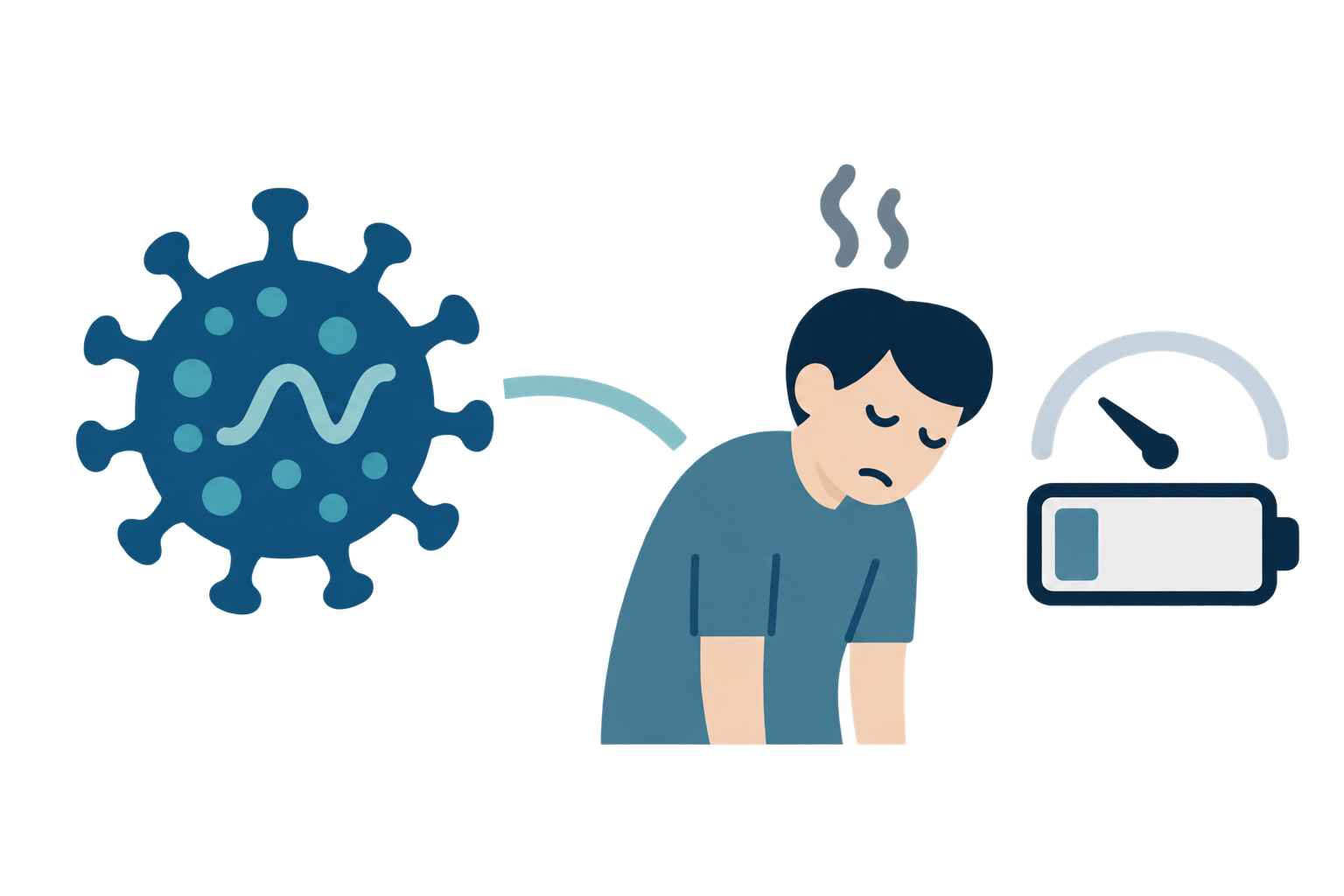
Epstein-Barr virus is a member of the herpesvirus family and one of the most common viruses in humans. It is best known for causing infectious mononucleosis, often called mono or the "kissing disease," and it spreads mainly through saliva. According to the CDC, over 90% of adults have been infected with EBV at some point.
After the first infection, EBV does not leave. It stays in the body for life, usually in a dormant (latent) state inside the immune system's B cells. For most people, it never causes another problem. In some, the virus can reactivate, and researchers are studying whether that reactivation contributes to lingering fatigue. Mono symptoms generally resolve within about four weeks, but some people feel run down for much longer.
Can EBV Cause Chronic Fatigue? What the Research Says
Infectious mononucleosis, which is caused by EBV, is recognized as one of the triggers of prolonged post-viral fatigue in some people, and viral infections more broadly are a known trigger for chronic fatigue syndrome (ME/CFS). The more specific question is whether EBV reactivation keeps fatigue going, and the research here is active and still developing.
Here is some of what is new:
- Reactivation after COVID-19. A 2026 review in Nature on virus reactivation in acute and long COVID-19 noted that reactivation of EBV and CMV has been linked to more severe outcomes in acute COVID-19. In one study summarized in the ME/CFS Evidence Atlas in April 2026, 40 of 140 post-COVID patients with persistent fatigue (28.6%) showed evidence of EBV reactivation, compared with 9 of 80 recovered controls (11.3%).
- Possible subsets. Researchers are exploring whether some cases of ME/CFS and long COVID are driven by immune dysregulation triggered by viruses such as EBV and HHV-6, which could explain why people with similar symptoms respond differently.
- Proposed mechanisms. Scientists are studying whether EBV reactivation keeps the immune system activated, sustains inflammation, and affects how cells produce energy. These are working hypotheses, not settled explanations.
The honest summary is that EBV looks like a meaningful contributor in a subset of people with chronic fatigue, which is exactly why testing is worth considering, but it is rarely the whole story.
What Chronic Fatigue Actually Looks Like
Chronic fatigue is different from ordinary tiredness. It is exhaustion that does not improve with rest and that limits what you can do. The CDC's diagnostic criteria for ME/CFS, based on the 2015 Institute of Medicine report, describe a pattern that includes:
- A substantial drop in your ability to do activities you used to do, with fatigue that lasts at least six months and is not relieved by rest.
- Post-exertional malaise, meaning symptoms worsen after physical, mental, or emotional effort.
- Unrefreshing sleep.
- At least one of cognitive impairment (often called brain fog) or orthostatic intolerance, which means symptoms that worsen when you stand upright.
Many people with EBV-related fatigue also report a recurring sore throat, swollen glands, muscle aches, or low-grade fevers.
EBV Tests Explained
EBV testing usually means a blood test for antibodies to specific parts of the virus. Each marker appears and fades on a different timeline, which is what makes the pattern useful. The CDC describes them this way:
VCA IgM (viral capsid antigen, IgM). Appears early in an infection and usually disappears within four to six weeks.
VCA IgG (viral capsid antigen, IgG). Appears in the acute phase, peaks two to four weeks after onset, then declines slightly and persists for life.
EA IgG (early antigen, often reported as EA-D). Appears in the acute phase and generally falls to undetectable levels after three to six months. In many people, EA antibodies are a sign of active infection, although about 20% of healthy people may have them for years.
EBNA IgG (EBV nuclear antigen, IgG). Appears slowly, two to four months after symptoms begin, and persists for life.
EBV PCR. A different type of test that detects viral DNA in blood. It is used in selected situations and is not part of the standard antibody panel.
Monospot test. The CDC does not recommend the Monospot for general use, because it can produce false-positive and false-negative results. It is not helpful for investigating long-term fatigue.
How to Read EBV Test Results
Interpreting EBV antibodies takes both the lab values and your clinical picture. In general:
- No VCA antibodies. You have not been infected and are susceptible to EBV.
- VCA IgM present without EBNA. This suggests a primary, recent infection.
- VCA IgG and EBNA IgG present. This suggests a past infection, from several months to years earlier, which describes most adults. High or elevated levels can persist for years and are not diagnostic of recent infection.
- A possible reactivation pattern. Some clinicians look for positive EA IgG together with VCA IgG and EBNA IgG in someone with an established past infection. Because some healthy people carry EA antibodies, this pattern is read alongside your symptoms and history, not on its own.
What EBV Testing Can and Cannot Tell You
EBV testing gives you a clear starting point: where you stand with the virus, and whether there are signs that your immune system is responding to it. What it does not do is diagnose chronic fatigue syndrome. ME/CFS is diagnosed from your symptoms, using the criteria above, after other possible causes are considered.
That is why the most useful approach treats the EBV panel as one piece of a larger picture, alongside your history, your symptom pattern, and testing for other common contributors.
Other Causes of Chronic Fatigue Worth Checking

Fatigue rarely has a single cause. Alongside EBV testing, a thorough workup often looks at:
- Thyroid function and iron levels, since low thyroid hormone and anemia are common drivers of exhaustion.
- Vitamin D and B12, which affect energy and mood.
- Sleep quality, including sleep apnea and other sleep disorders.
- Blood sugar regulation, which can cause energy dips throughout the day.
- Hormone patterns, including cortisol rhythm and sex hormones. A DUTCH hormone test can map these.
- Gut health and other infections, including Lyme disease and digestive imbalances.
- Stress, mood, and mental health, which are closely tied to energy.
Who Should Consider EBV Testing?
EBV testing may be worth discussing if:
- You have had unexplained fatigue for more than six months.
- Your fatigue began after mono or another viral illness and never fully lifted.
- You have persistent fatigue after COVID-19.
- You have recurring sore throats, swollen glands, or low-grade fevers along with exhaustion.
Supporting Recovery: Natural and Lifestyle Strategies
A holistic plan can support your energy and immune function while you work out the underlying contributors. Individual responses vary, so the right plan is personalized.
Pacing, not pushing. For ME/CFS, current guidance emphasizes pacing: staying within your energy limits, which the CDC calls your "energy envelope." Because exertion can trigger post-exertional malaise, NICE's 2021 guideline advises against fixed, step-by-step exercise programs. Gentle movement can have a place, but it should be matched to what your body can handle that day.
Nutrition. A balanced diet rich in vegetables, fruit, quality protein, and healthy fats supports steady energy, and limiting ultra-processed foods and added sugar can help avoid energy crashes.
Sleep and stress. Consistent sleep and stress-reduction practices such as breathing exercises and meditation support the nervous system and immune function.
Targeted supplements. Vitamin C, vitamin D, and zinc are commonly used to support immune function. Checking your levels first allows dosing to be individualized.
Herbs. Astragalus root, olive leaf extract, and licorice root are commonly used in immune-support protocols. Herbs can interact with medications, and licorice root can raise blood pressure in some people, so they are best used under professional guidance.
How a Functional Medicine Approach Works
A functional medicine approach starts with a detailed history, adds targeted testing, and builds a plan around what is actually driving your symptoms. For fatigue, that might mean EBV testing together with thyroid, hormone, nutrient, and gut testing, followed by a personalized plan and regular check-ins to adjust it. The goal is to understand the whole picture, not only a single marker. You can read more about how functional medicine works in Waxahachie in this guide.
Take the Next Step With a Root-Cause Approach
EBV testing can be a valuable part of understanding persistent fatigue, especially when it follows mono, COVID-19, or another viral illness. Read in context, with your symptoms and a broader workup, it can help you move from guessing to a plan.
At Infinity Wellness Telehealth, located in Waxahachie, TX, we specialize in holistic, root-cause care tailored to your unique health journey. Serving local and nationwide patients through in-person and virtual services, we offer comprehensive programs for conditions such as chronic fatigue, hormonal imbalances, and digestive issues. Our goal is to help you achieve long-term wellness and vitality. Ready to find out what is behind your fatigue? Book an appointment with Infinity Wellness Telehealth today.
Frequently Asked Questions
What do reactivated EBV lab results mean?
Some clinicians look for a pattern of positive EA IgG together with VCA IgG and EBNA IgG in someone with an established past infection as a possible sign of reactivation. Because some healthy people carry EA antibodies for years, the pattern is interpreted alongside your symptoms, history, and other findings rather than on its own.
How do I interpret my EBV test results?
No VCA antibodies suggest you have not been infected. VCA IgM without EBNA suggests a recent infection. VCA IgG with EBNA suggests a past infection, which describes most adults. High antibody levels can persist for years and are not diagnostic of a recent infection, so results are best reviewed with a clinician who knows your symptoms.
What is considered a high Epstein-Barr level?
Reference ranges vary by laboratory, so the report's own range is the starting point. The CDC notes that high or elevated antibody levels may be present for years and are not diagnostic of recent infection, which is why the overall pattern and your symptoms matter more than a single number.
What does EBV fatigue feel like?
People often describe a heavy, whole-body exhaustion that rest does not fix, often with brain fog, unrefreshing sleep, muscle aches, a sore throat, or swollen glands. In chronic fatigue syndrome (ME/CFS), symptoms can also worsen after physical or mental exertion, which is called post-exertional malaise.
Can EBV be cured?
EBV stays in the body for life, usually in a dormant state inside B cells, so the goal is not to remove the virus. The focus is on supporting immune function, identifying anything else that may be draining your energy, and building a plan around your symptoms.
How long does fatigue last after mono?
Symptoms of infectious mononucleosis generally resolve within about four weeks, according to the CDC, though some people feel tired for longer. If you have been ill for more than six months, the CDC advises considering other causes of chronic illness or chronic fatigue syndrome, which is a good point to look at EBV testing and a broader workup.